Main Aim
Initial Designs
Navigation applied in to literature
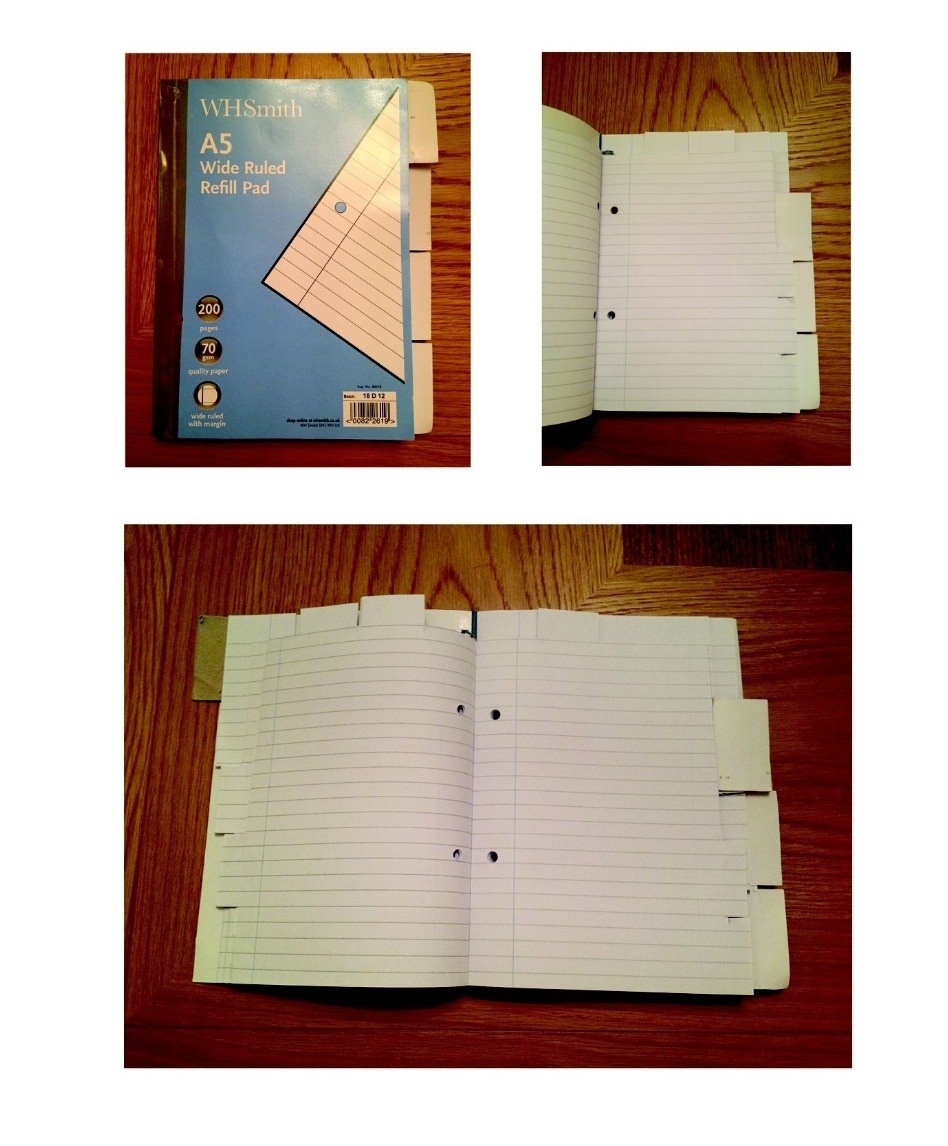
The concept here comes from how we move around a website with the use of the navigation, an average site tends to have the main nav and a sub nav-often on the side of an internal page of the website.
I wanted to apply this design to real life objects and see how people respond when presented with this change of interaction.
Investigating various forms of interaction – box prototypes
Artefacts 1
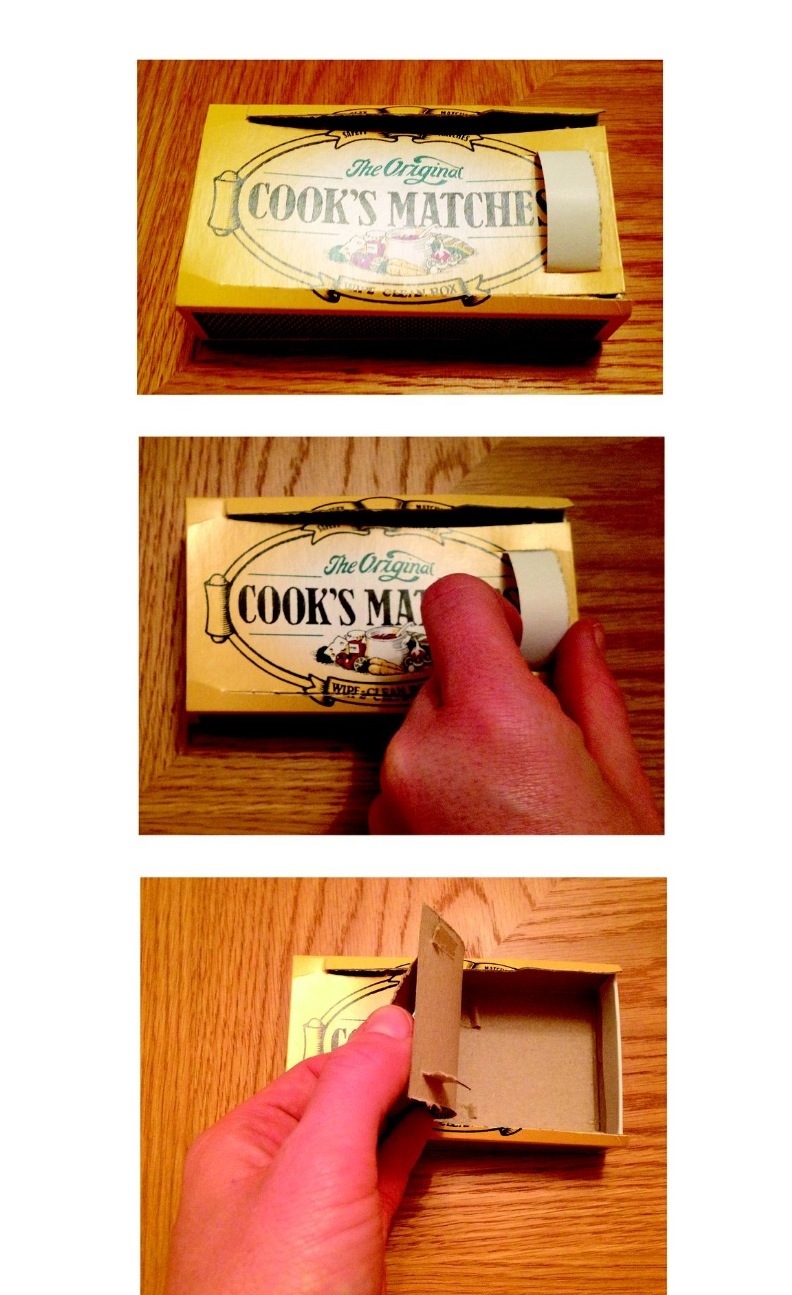
Here I used match boxes and wanted to change the way we interact with this familiar object.
To open this box the interaction needed is to pull open using a handle – a very familiar action in everyday life but not so within the digital environment.
Artefacts 2
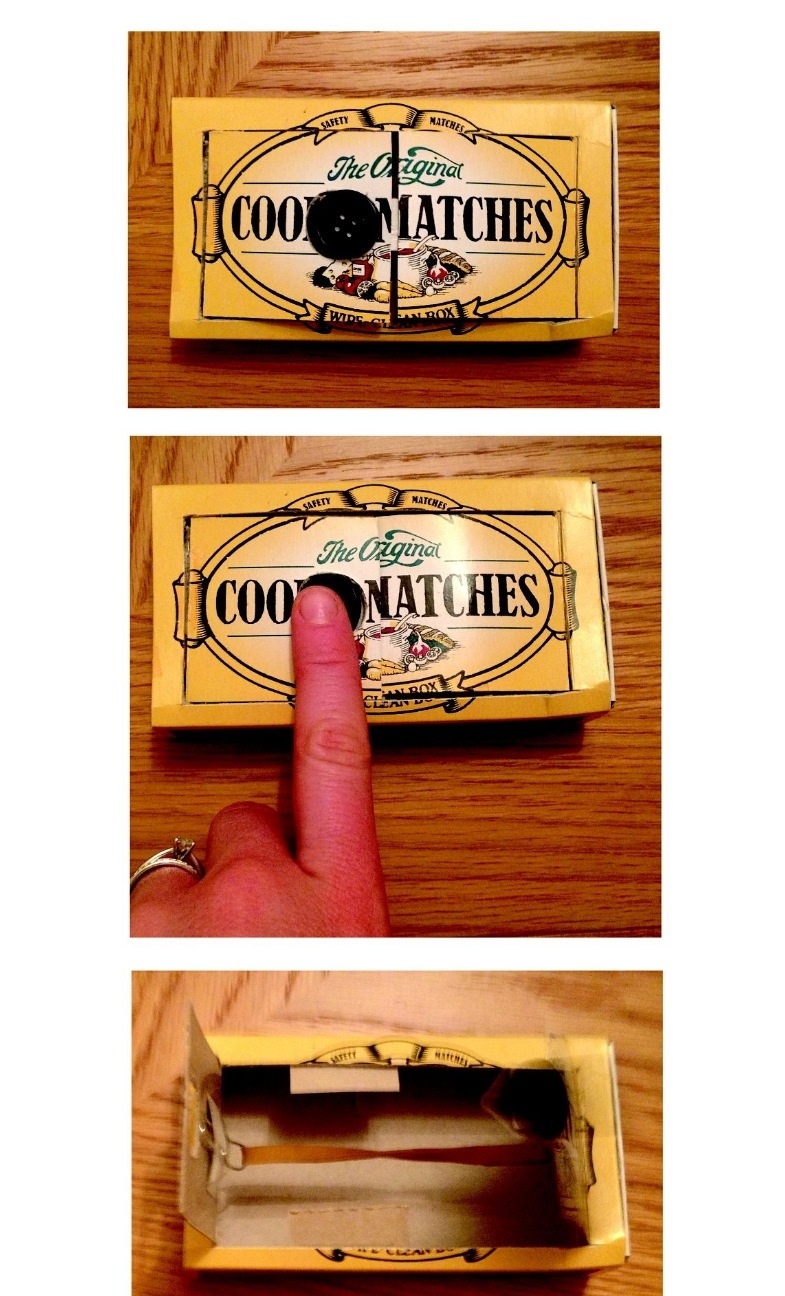
Here is investigating the idea of the button, a common function for everyday life and digital. However this function within digital is fading now with the use of touch screen and swiping. I wanted to take the idea of button quite literally as a function for clothing, reverting it right back to the buttons original purpose, and apply it to a box and see how people respond.
Artefacts 3
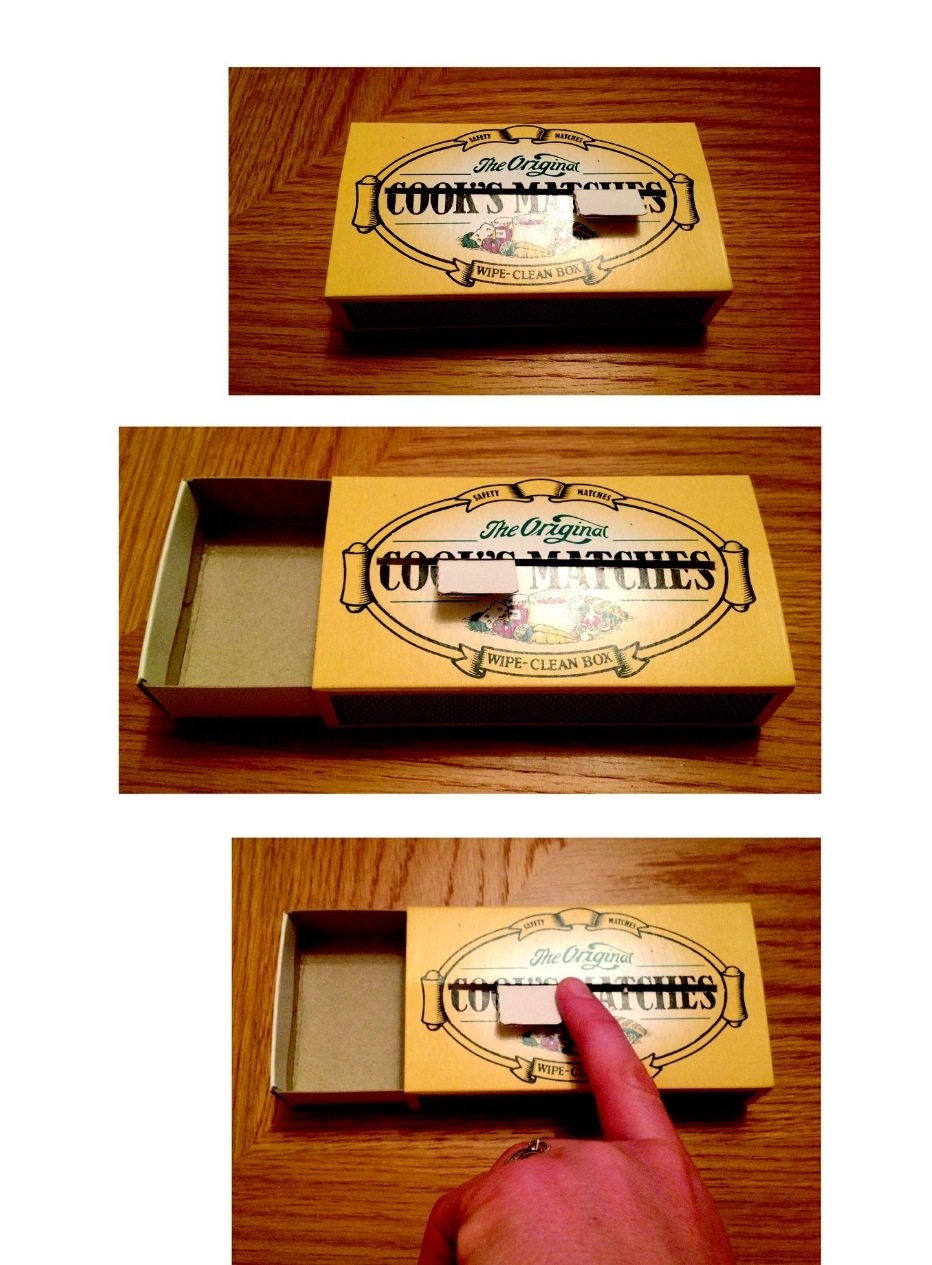
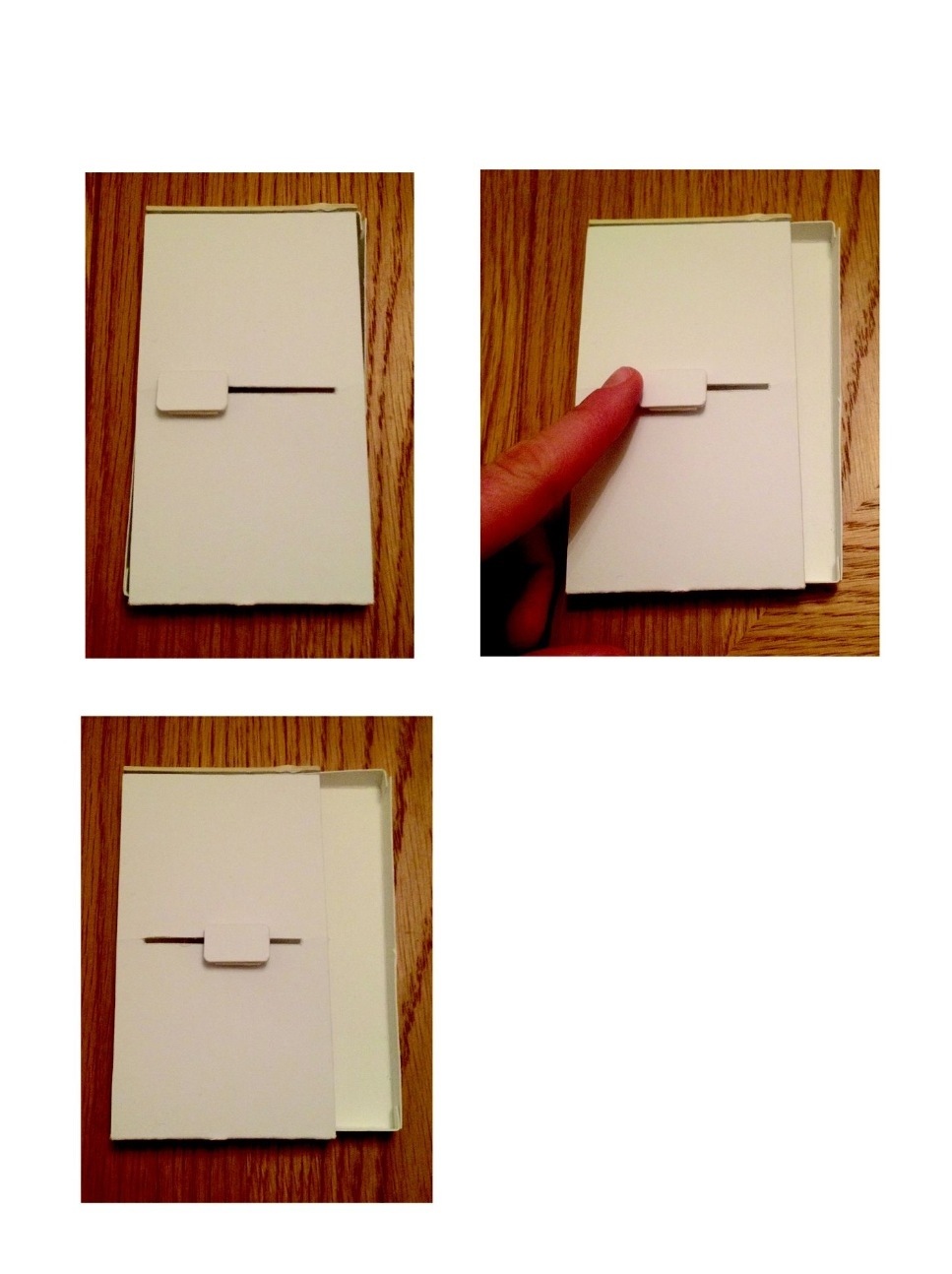
With this artefact I was keen to play with the swiping action. We have seamlessly moved from pressing a button, to clicking and now to swiping. Here I want to investigate how people respond when that action is applied to a real object.
Artefacts 4
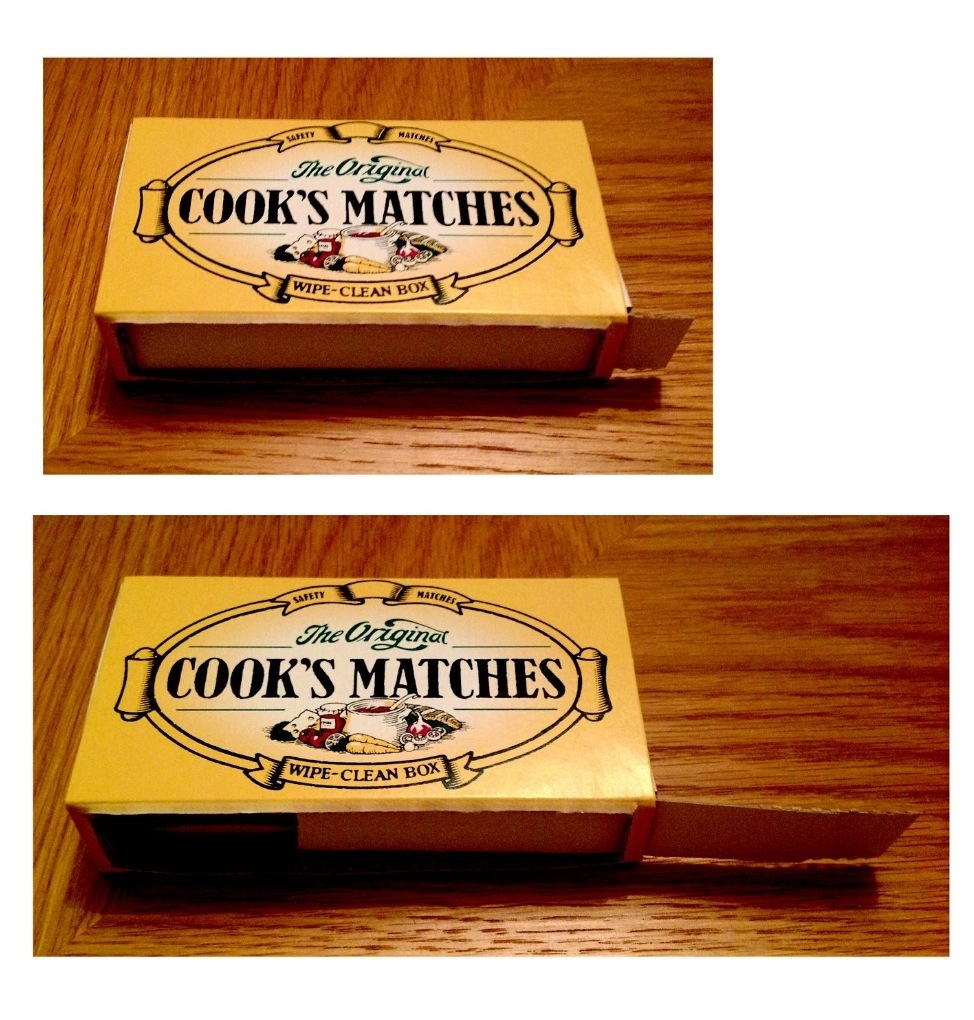
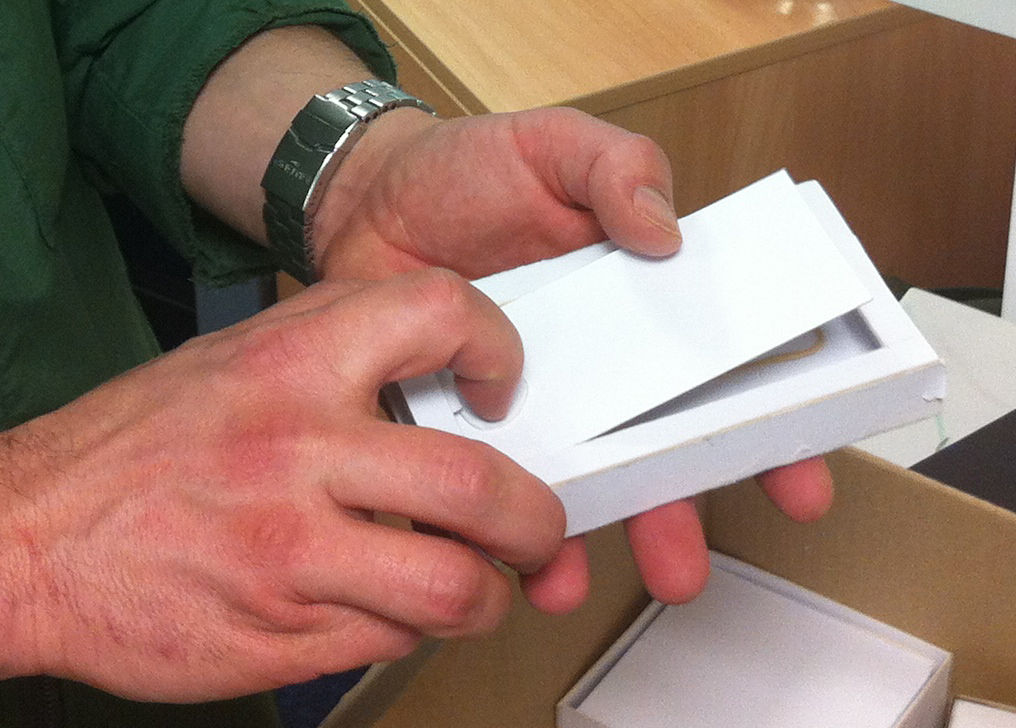
Here is looking at another form of pulling to open, a slide function.
Artefacts 5
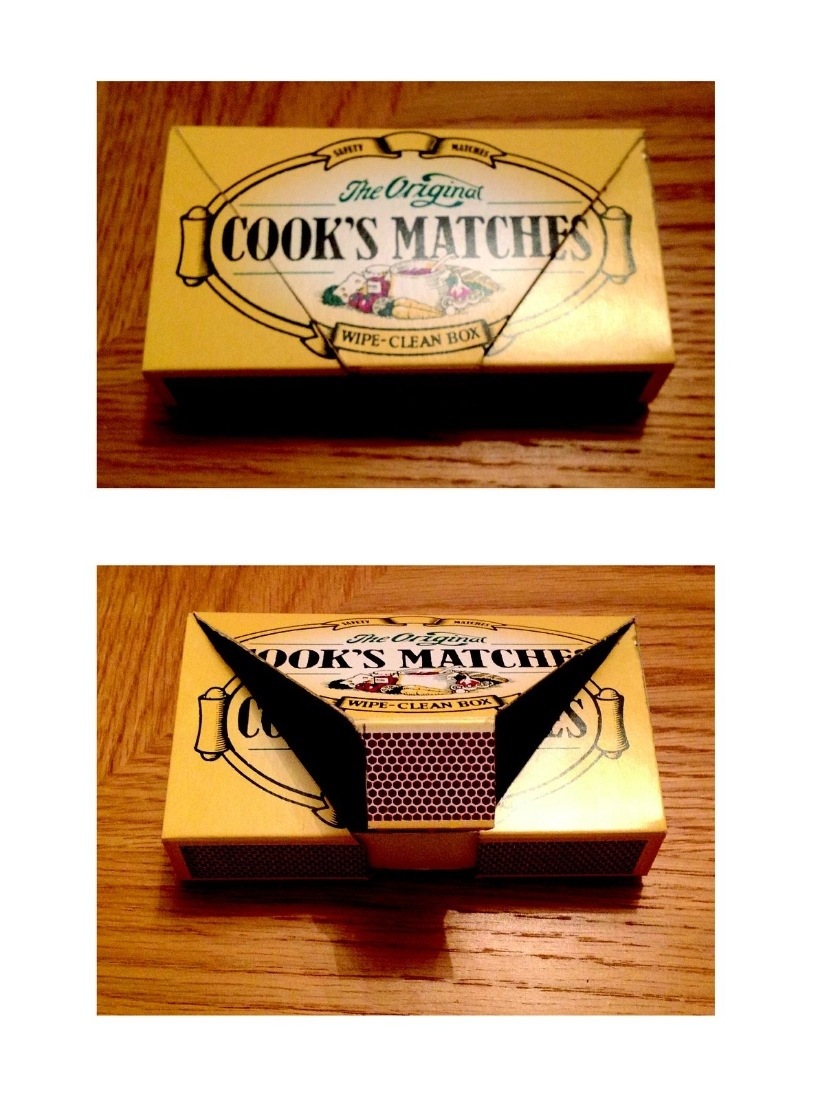
This takes the concept of most recent malteaser box design which entails releasing a tab and then lifting to open.
Further Designs
Navigation applied in to literature
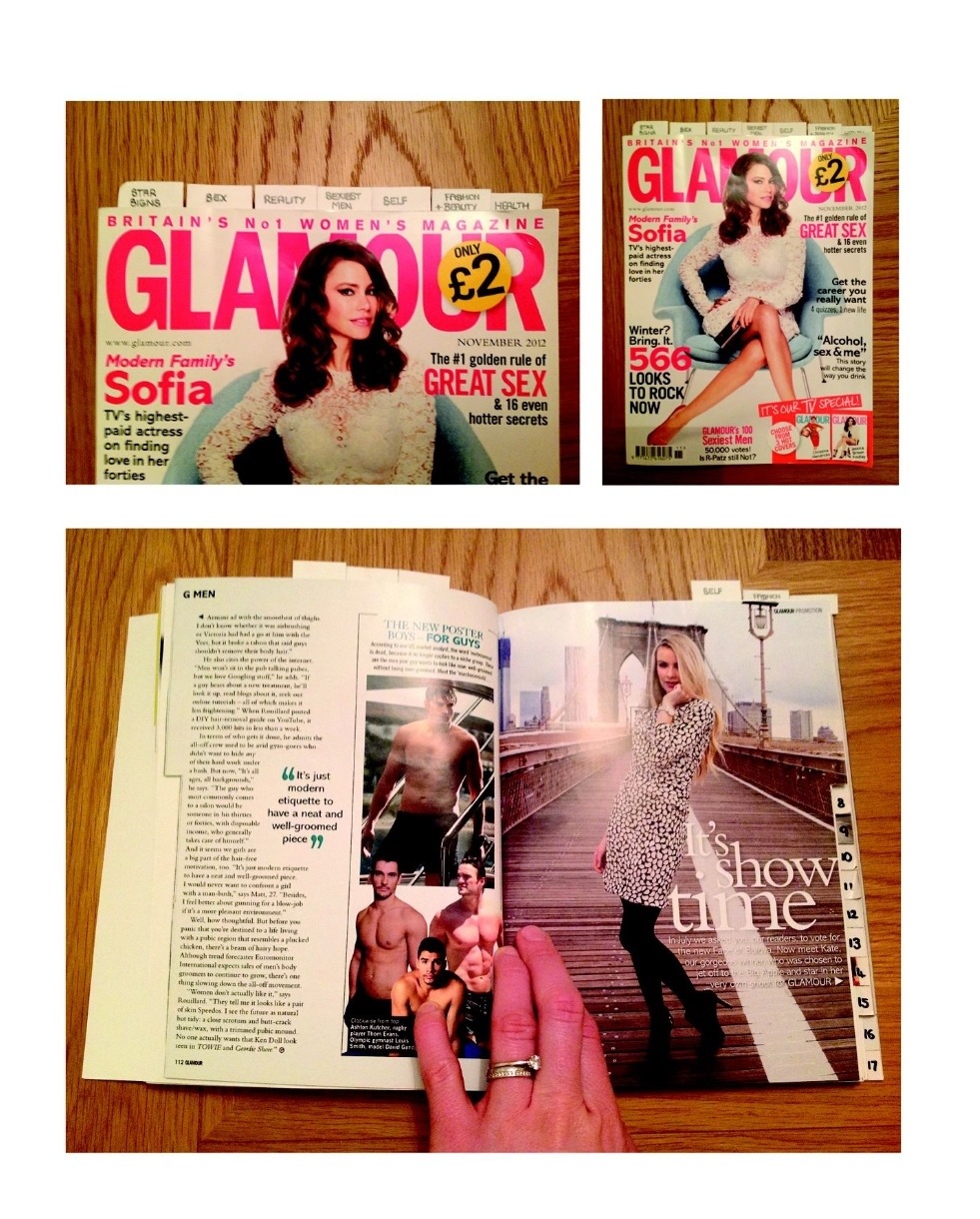
Aim.
Here I wanted to explore the navigational aspect further and apply it to places it is yet to be found.
Weakness.
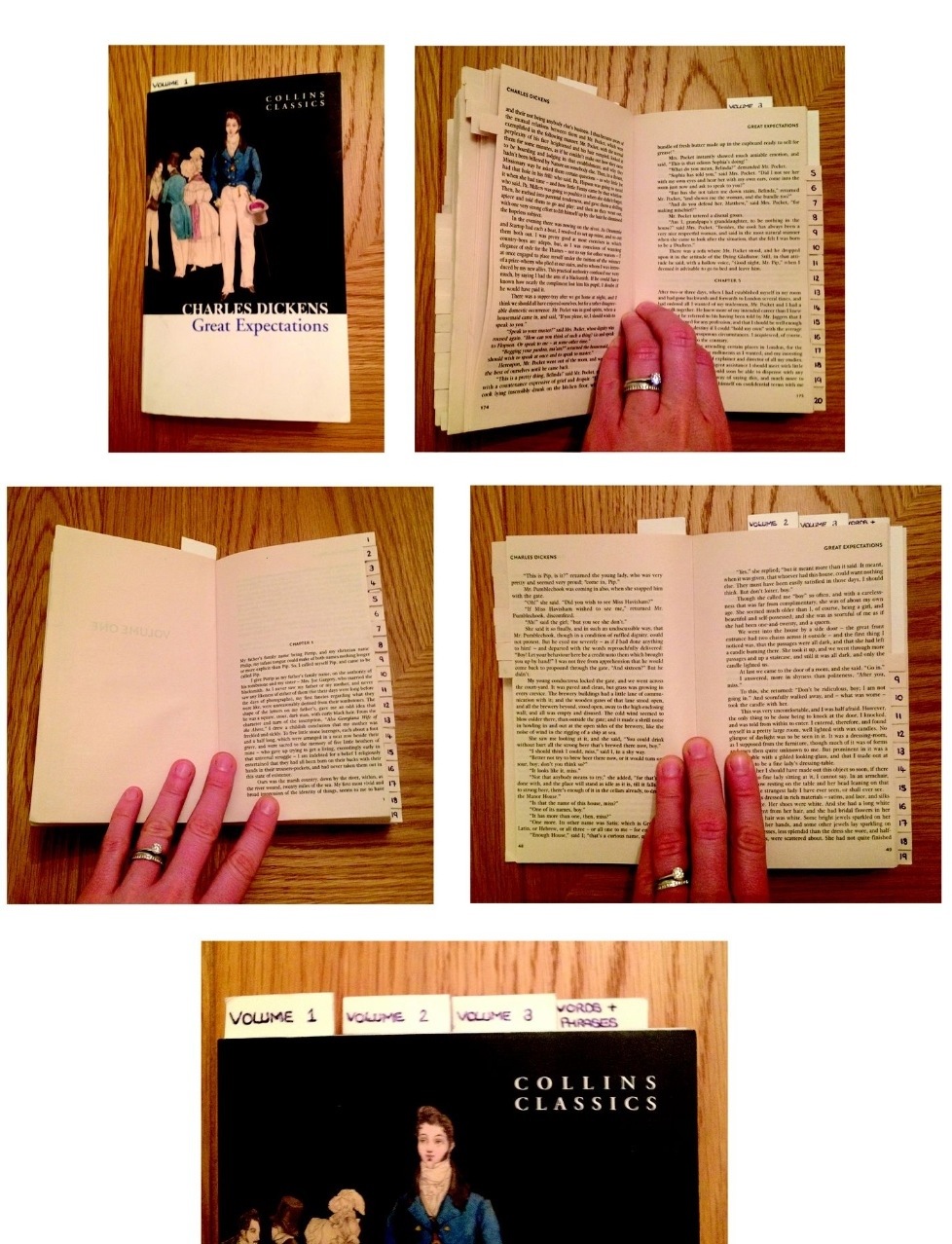
I found with this that the idea already exists in some form or another particularly with the use of folders, notes, post its etc.
The book proved difficult to implement and the structure and design of the book would need rethinking if a function like this was to be applied. I also feel that this function is unnecessary as people tend to read books from start to finish and would only go in mid way or at a chapter if they have paused and are returning to the page they left, or a bookmark or turning the page corner achieves this successfully.
Strengths.
However the idea taken in to the magazine works well. Magazines can be very busy and although people like to flick there are always sections that are their favourites…like the star signs, or fashion area. By applying this navigational concept this allows the reader to find their area of interest and then continue to flick if they require so. This functionality has great potential for further investigation.
Exploring the key favourites for the boxes
Buttons
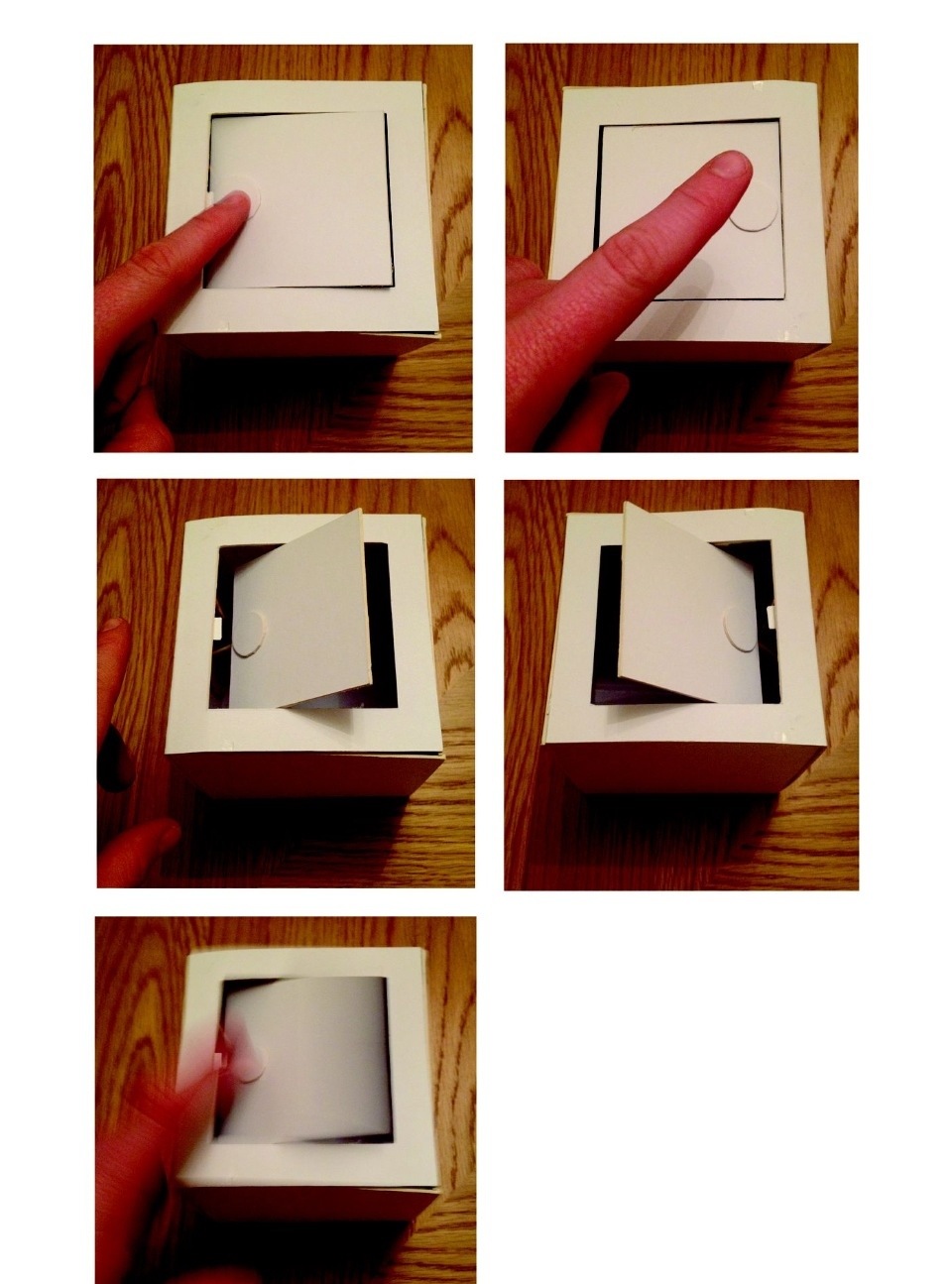
Aim.
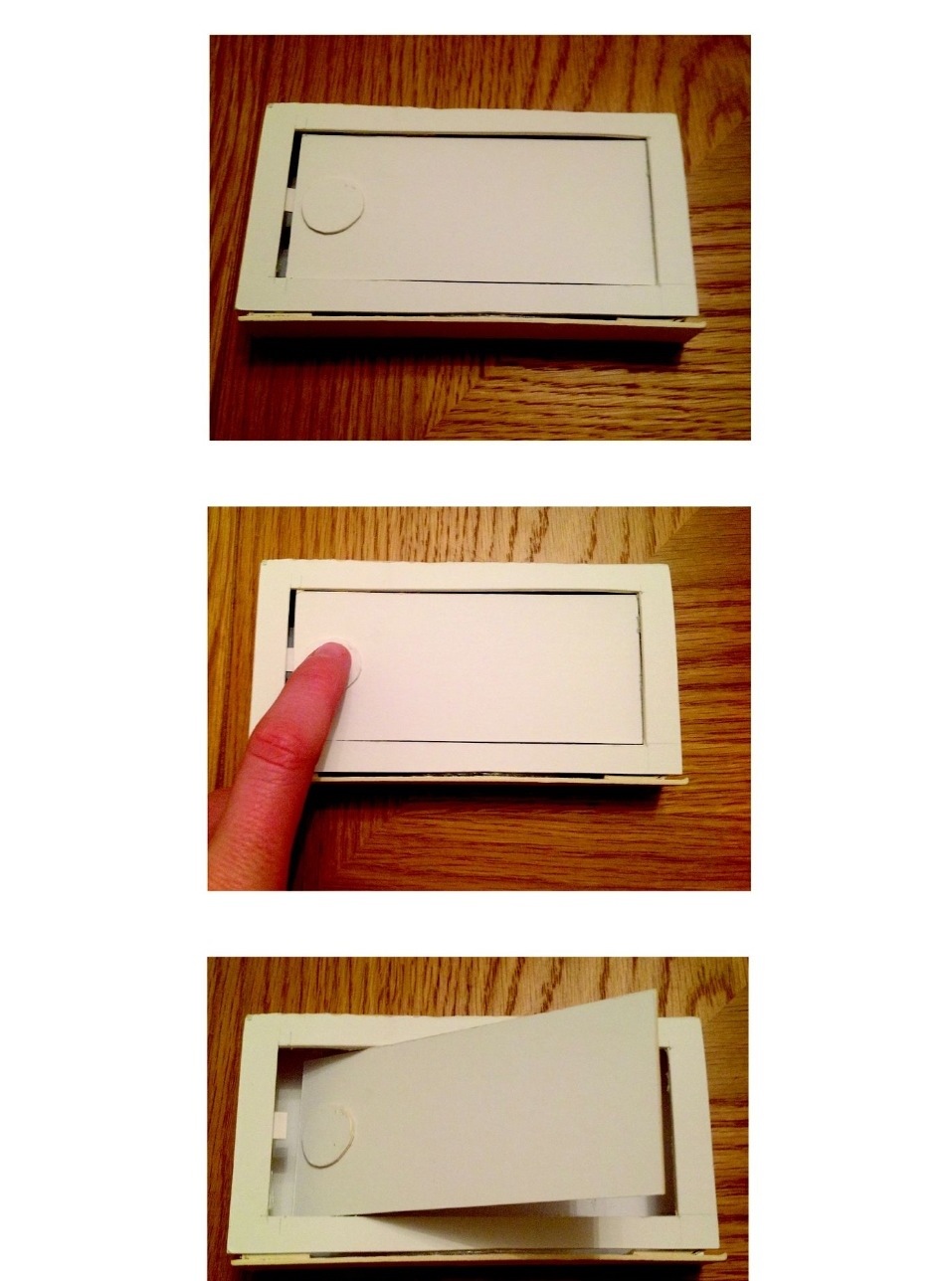
Here I was keen to explore the button concept as we know it for interaction of an object and real life but strip it from any symbol or colour. I wanted to apply it to a very generic box so no predefined indicator of how normally one would interact. I also wanted to take this and apply it to a box of similar shape and size to that of an iPhone to see if the interaction between the two object changes.
Weaknesses.
With the boxes already having known functions applying the button without any indicators, symbols or colour may result in weaker interactions.
Strengths.
Stripping the button of all its identity shall be a great test to understand its worth in society and what it is the makes it a button. With this finding it can then be used for online testing (which has been included in the online experiment) to see whether the two conclude the same.
Swiping
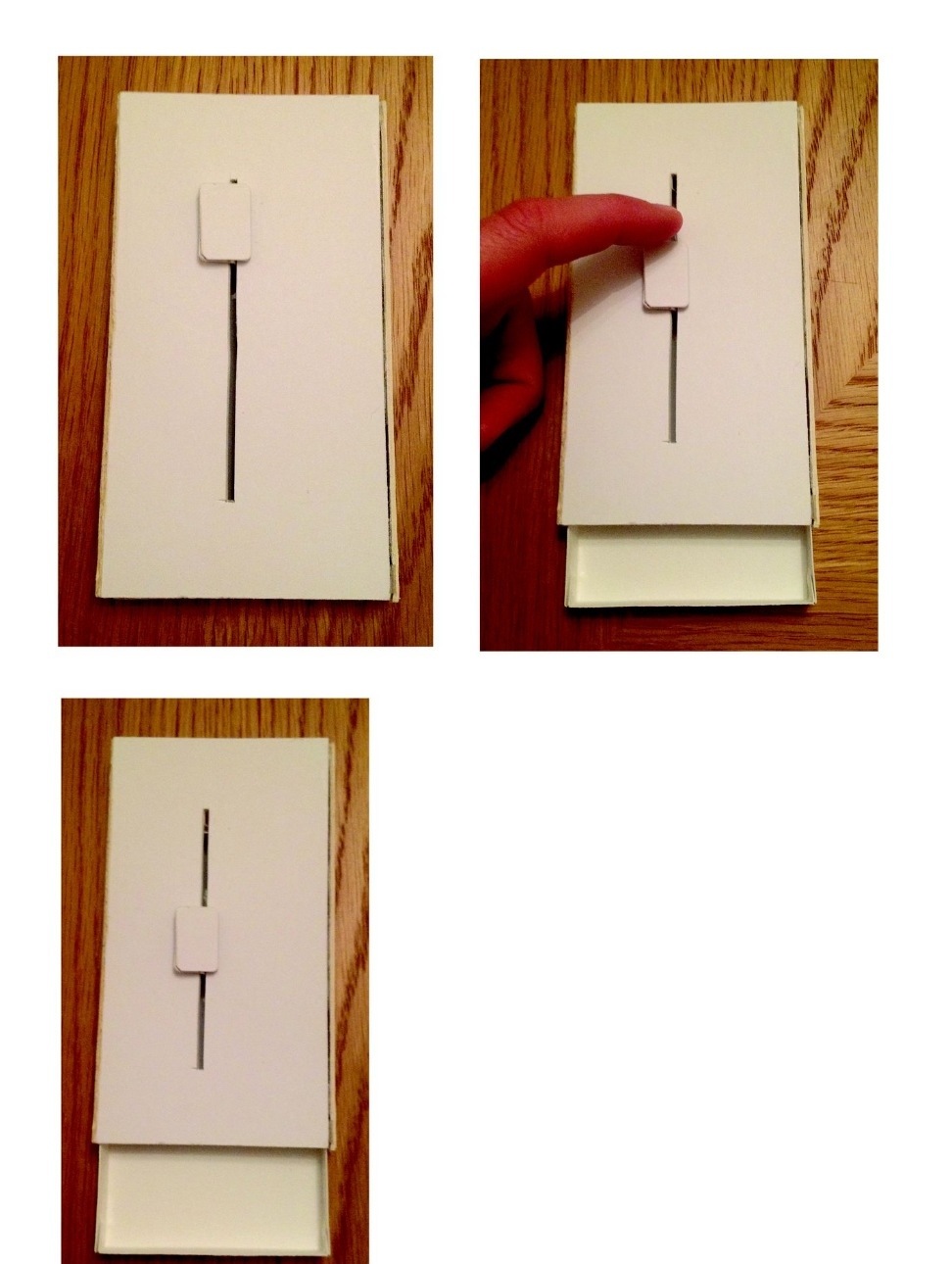
Aim
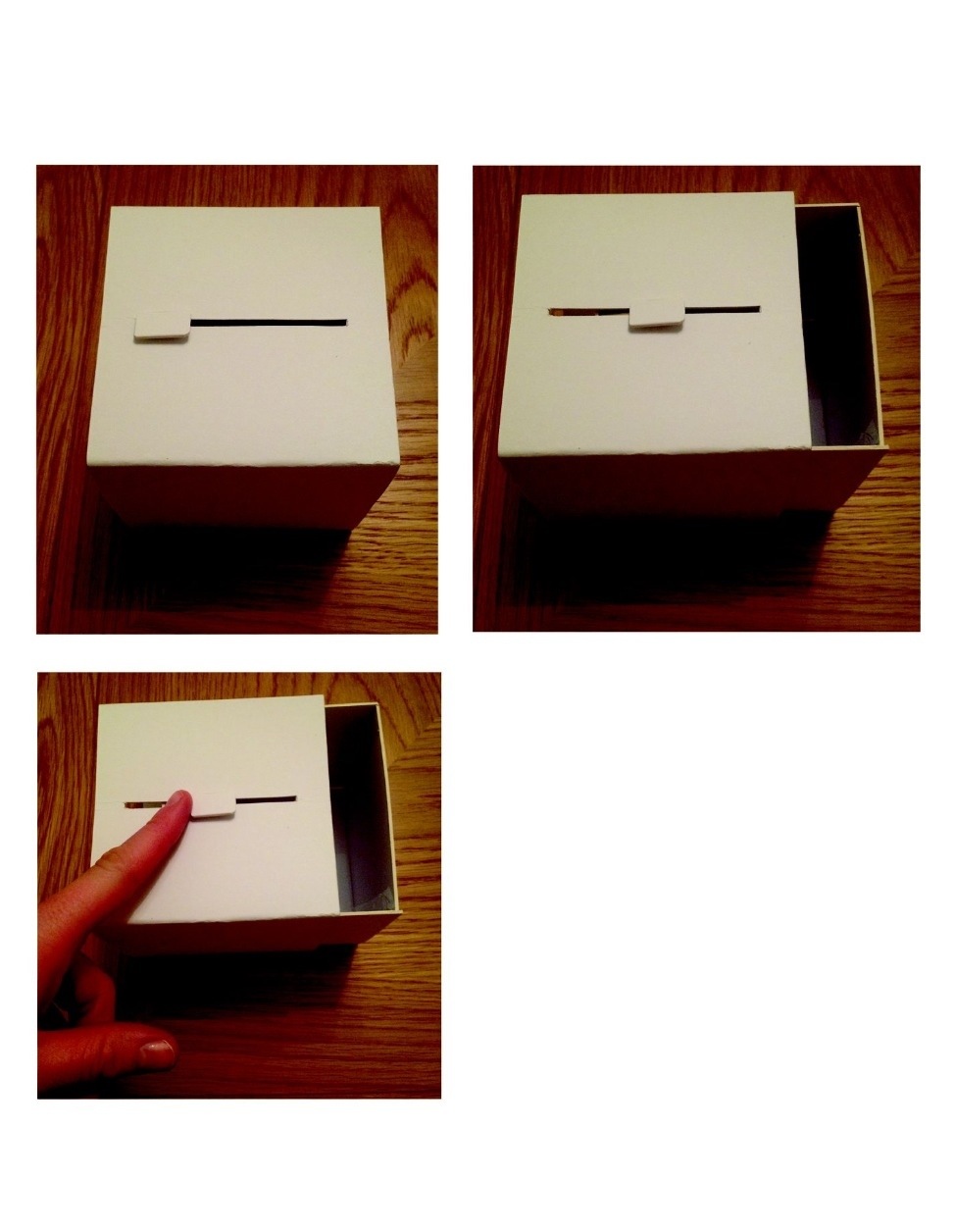
Having focused on the change from button to swiping actions I was keen to apply this to the objects. As with buttons shown earlier I wanted to use the movement of swiping within objects as a form of interaction. I applied this to a plain normal sized box and also an iPhone shaped box to see how people would respond.
Weaknesses
To be able to replicate the actual swiping function as used on electronics devices within a real object is quite hard and would take sometime therefore this swiping implemented in the objects here still requires engagement with a tab and a movement of pushing or pulling is required which may not be an exact replica of swiping however it resembles it close enough for this artefact and its testing purpose.
Strengths
Despite not being a true replica the interaction is very similar and to my knowledge no function currently exists like this within a real object similar to ones I have produced here. This therefore has great scope for further investigate, creating opportunities for products to advance with technology ensuring the users engagement its always maintained.
Interactions
Interaction with Prototypes
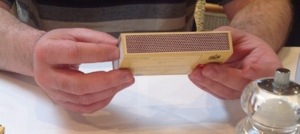
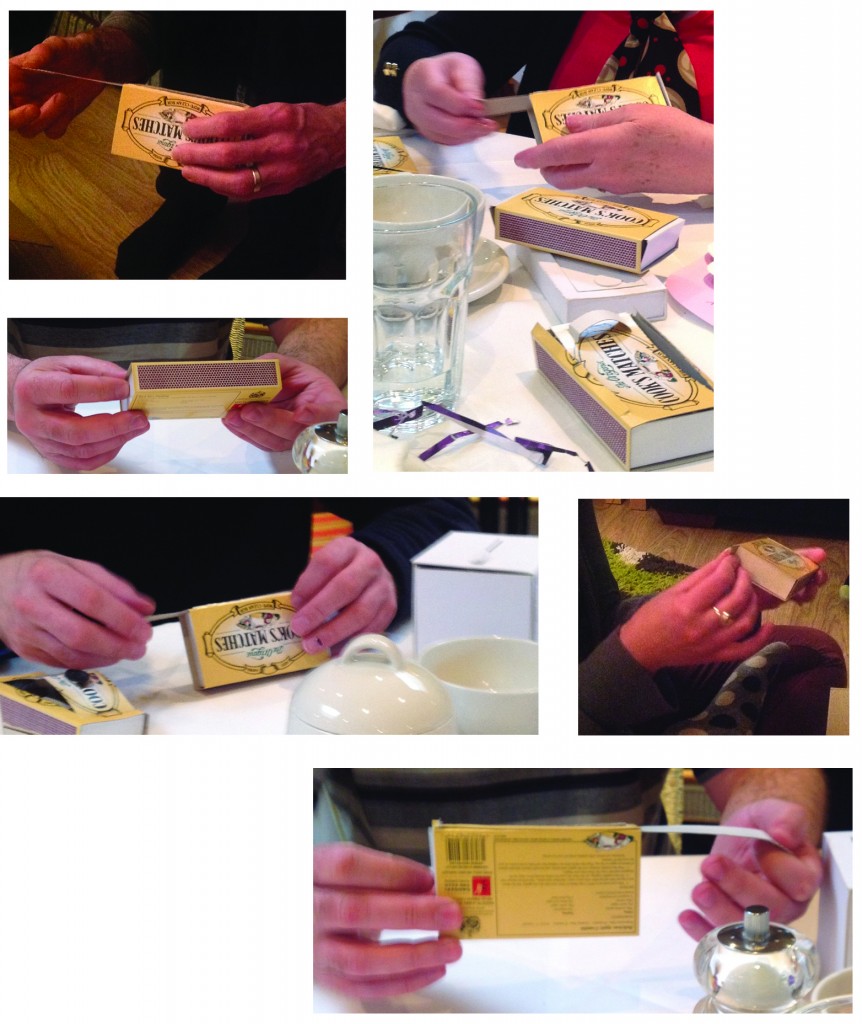
Observations: On occasion it was noticed that on first instinct people picked up the match boxes and pushed one end, despite there being a clear sign for other ways to interact we are conditioned by this familiar object and regular use, to push one end to open it.
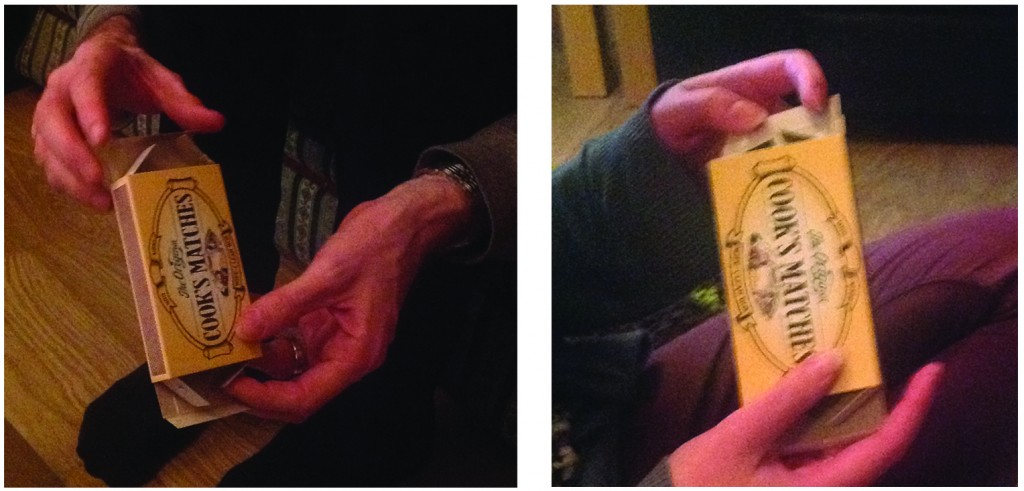
Observations: This concepts was reacted to well, I would conclude this would be due to a many boxes having a tabbed-pull to open action, as shown in the above picture, – although not common for a matchbox this is common for many other boxes.
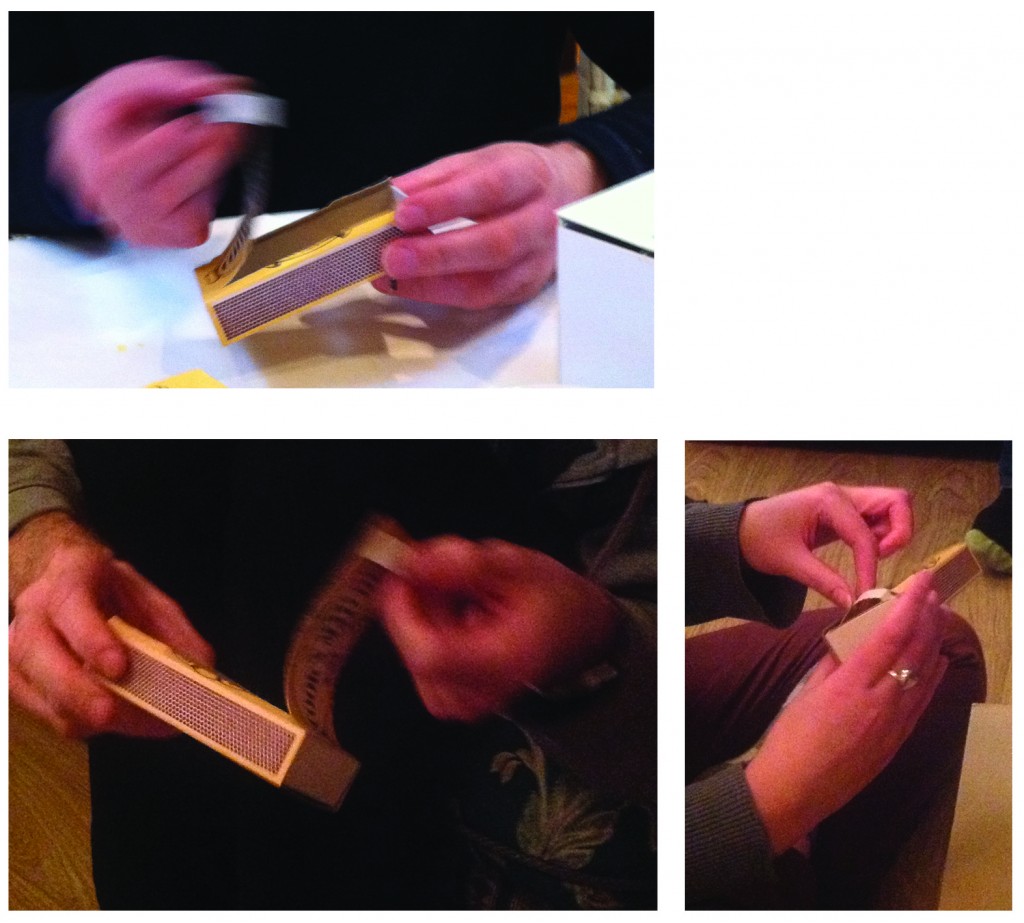 Observations: Having a pull function on a box is again a function which appears on many objects and the handle being a strong indicator ensured all participants reacted correctly immediately with this object.
 Observations: With the responses to the previous and this I would conclude that having a call to action that sits out from the objects is a strong indicator for the user to interact as desired. When the function sits low and level on/in the box this caused some confusions on occasion as you shall see further on.
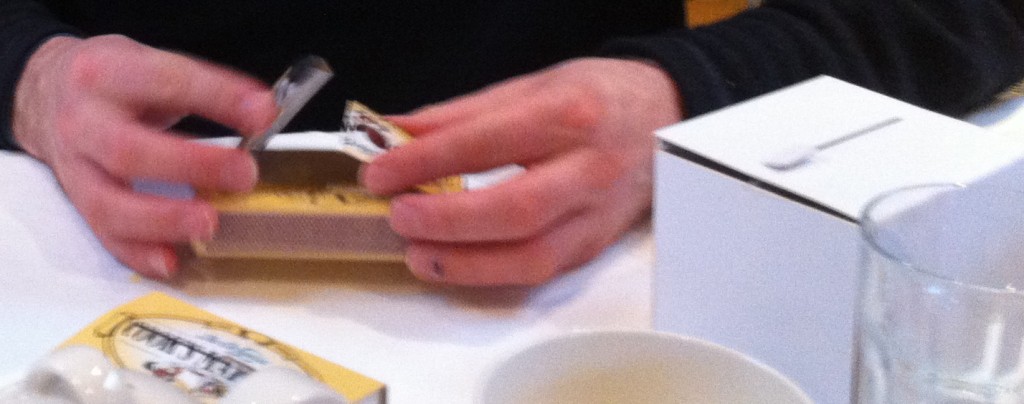
 Observations: Although it took the users a while to find the indicator on this, possibly due to it being set in the box and not standing out, once found all users responded well with this know function.
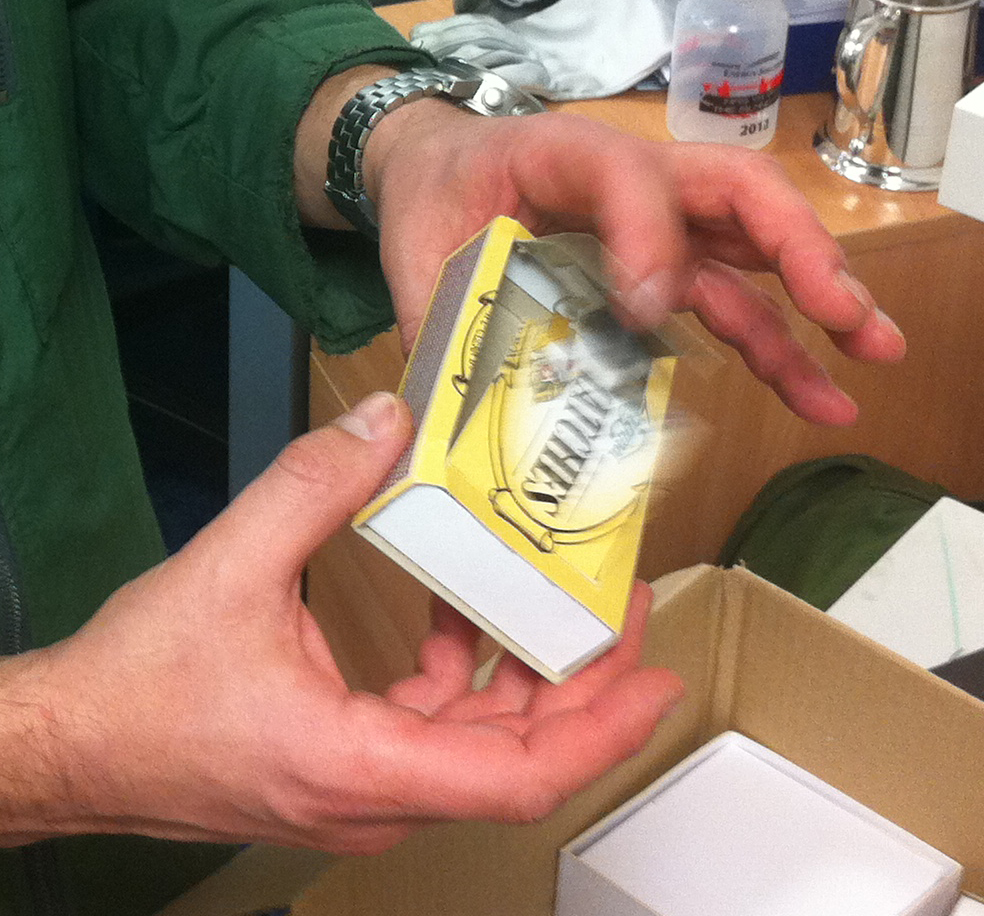
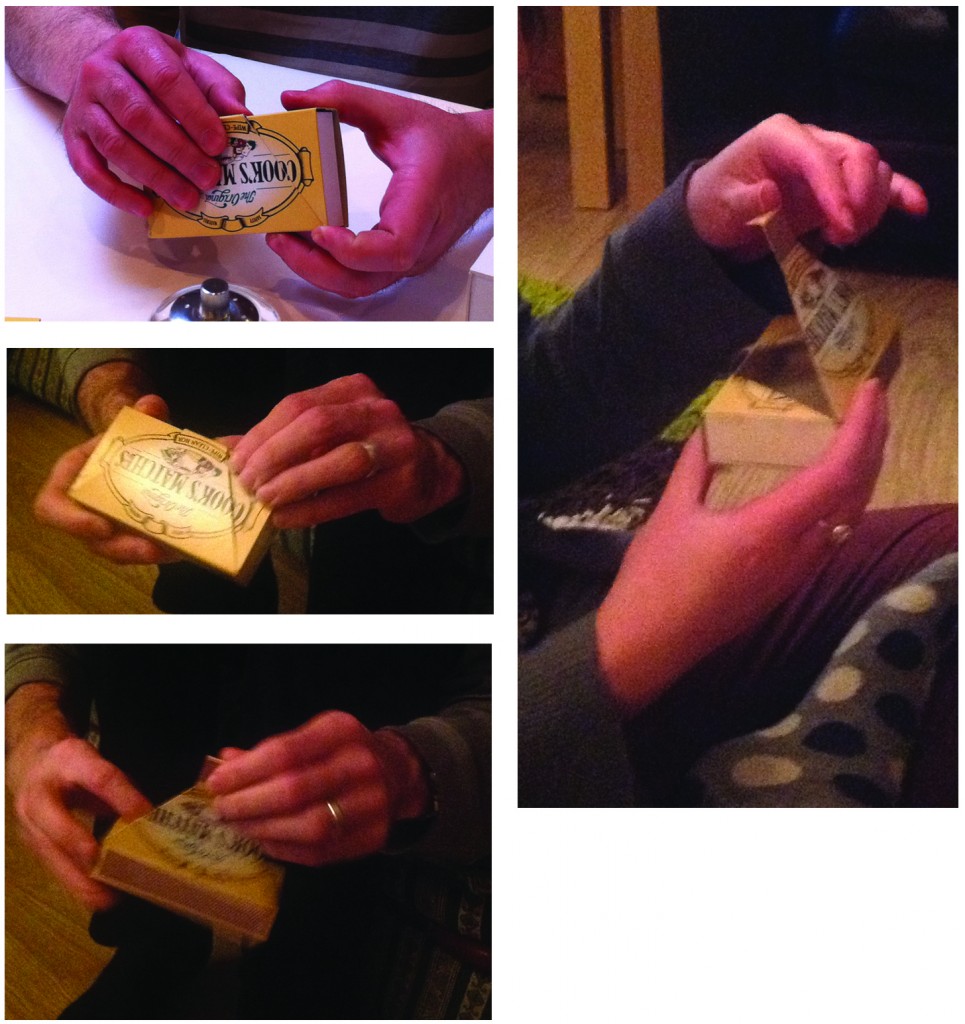
Observations: The implementation of a real button here found that approximately 50% of people undid the button like you would on clothing rather than pressing to open. This shows that despite taken out of its context the object/button still holds the relation with clothing, bags etc. The other half of users responded by pressing the button – which on the flip side would show that because the button it out of context new rules can be applied. I would suggest here that to take a device which as predefined rules out of context and place it in a new surrounding would cause confusion and if new functions are required creating a new device with little or no known rules would be best.
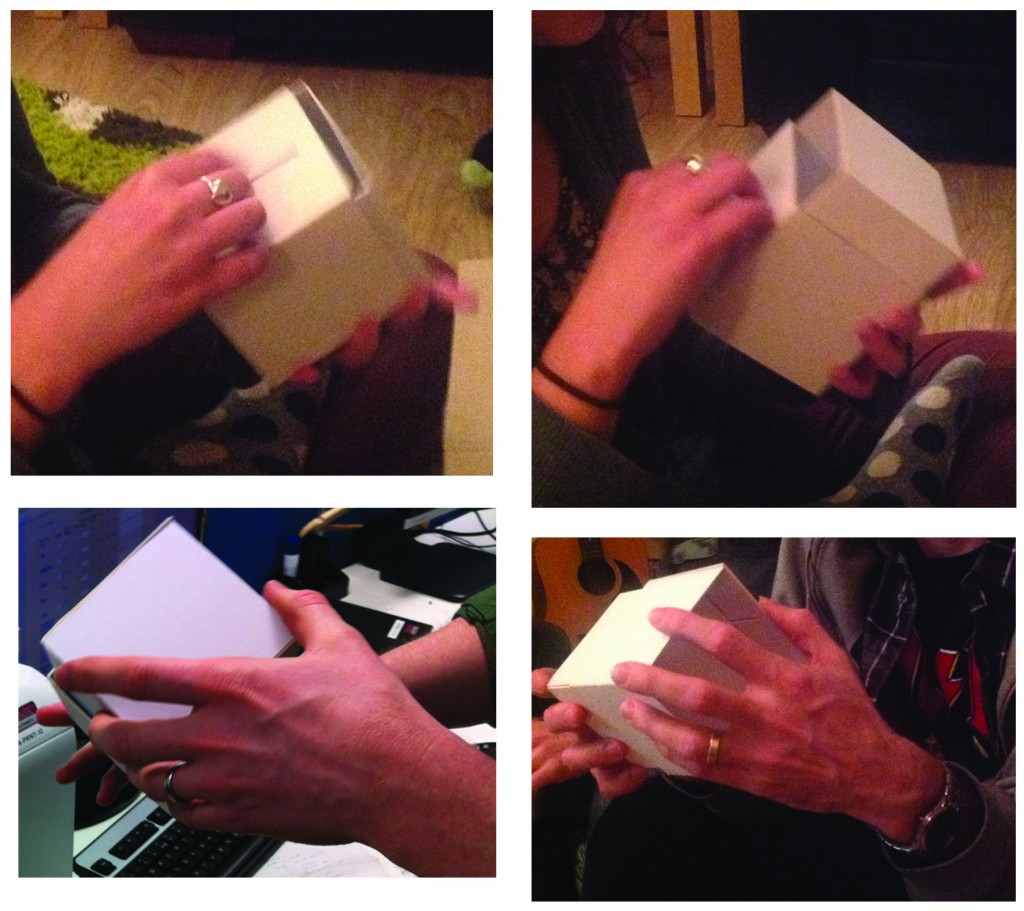
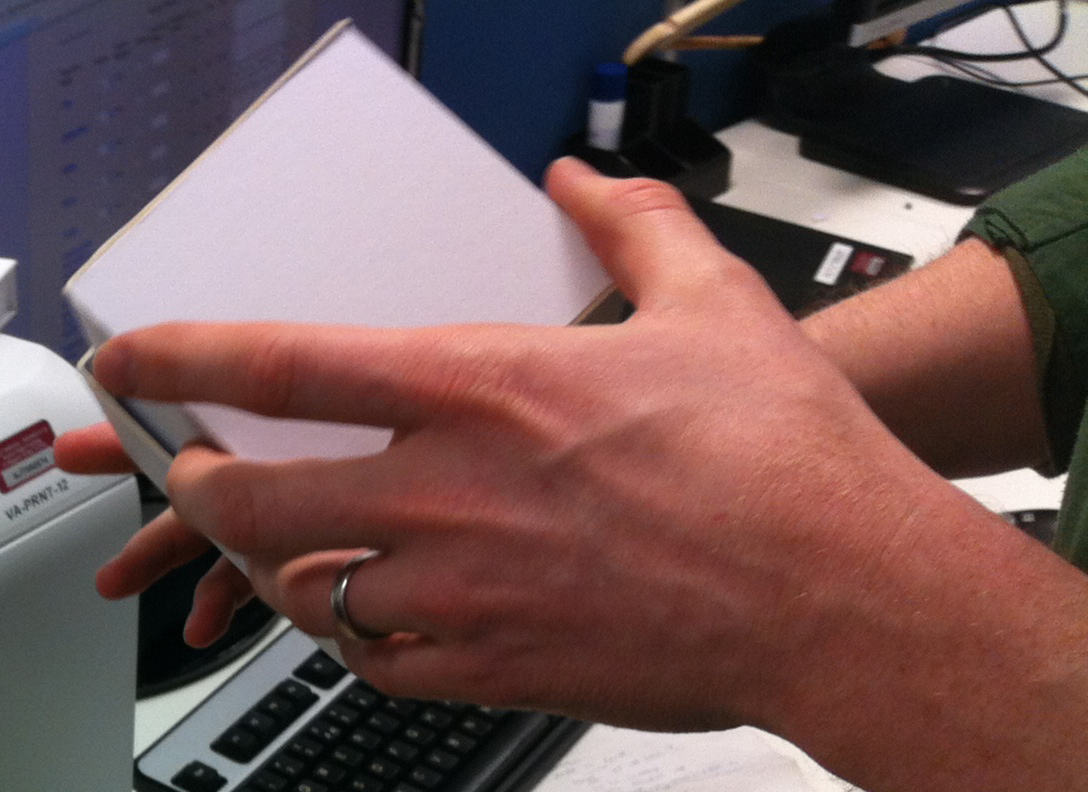
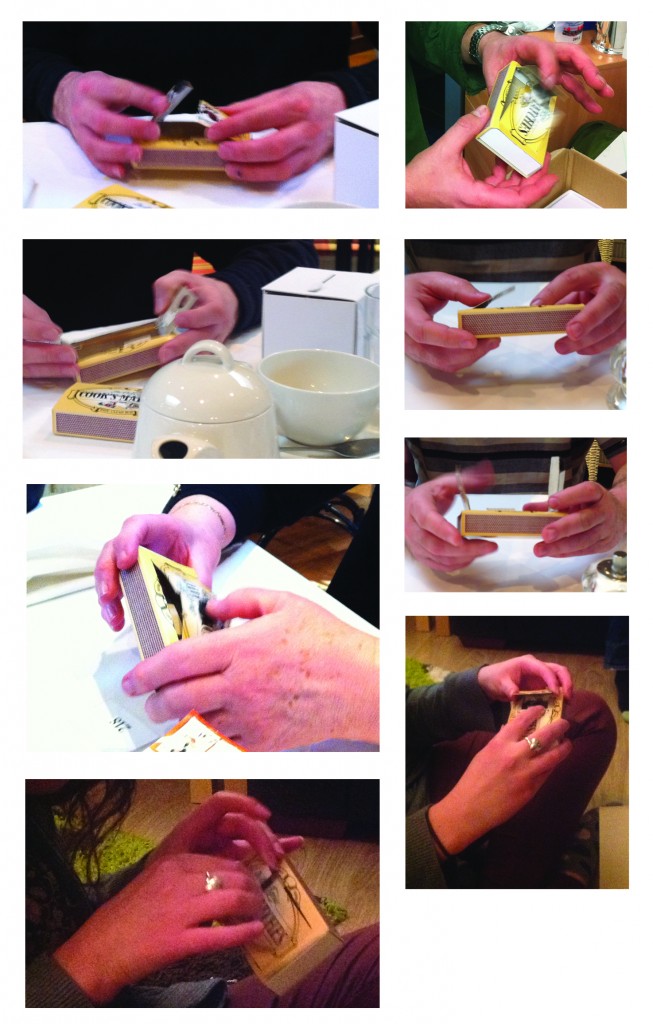
Observations: Here I want to highlight an interesting find that one participant did not respond as expected with the slide function instead they pulled at the side of the box. The reason this could be due to many factors one being that the slide function on the top could have been a symbol/indicator to slide open the box but from the side not necessarily a call to push the slide tab at the top. This participant followed to feedback that he does not own nor even come to interact with anything of a sliding function which could have some role in the reason why he responded in this way to this object. However the majority of the participants responded immediately to engage with the tab on the top to open the box and most importantly ALL either owned a iPhone/iPad or use something similar before.
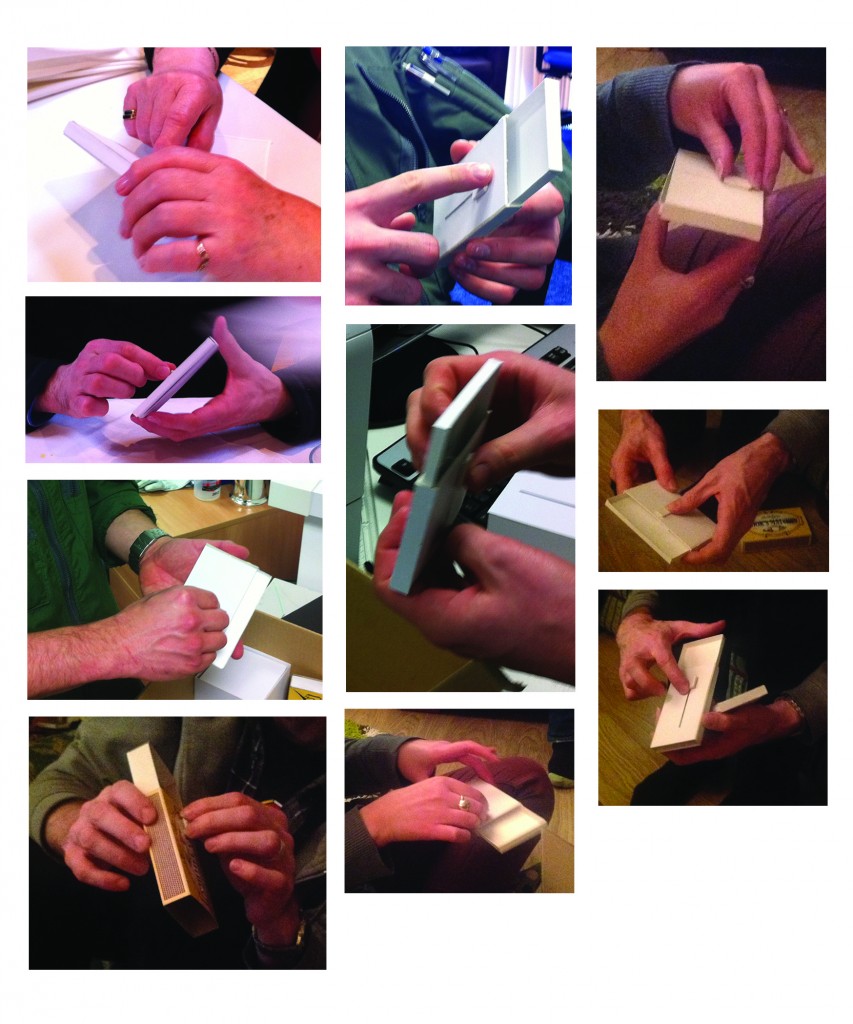
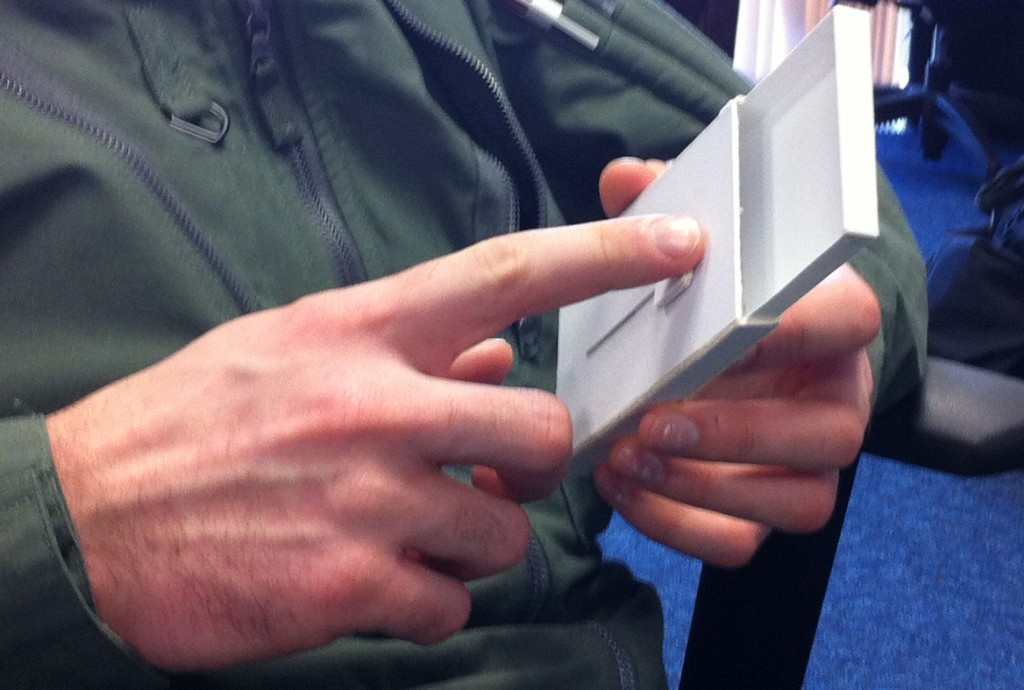
Observations: However when it came to interacting with the slider on the box shaped and sized to resemble a phone every single participate interacted with the slider with ease, as the object became more familiar.
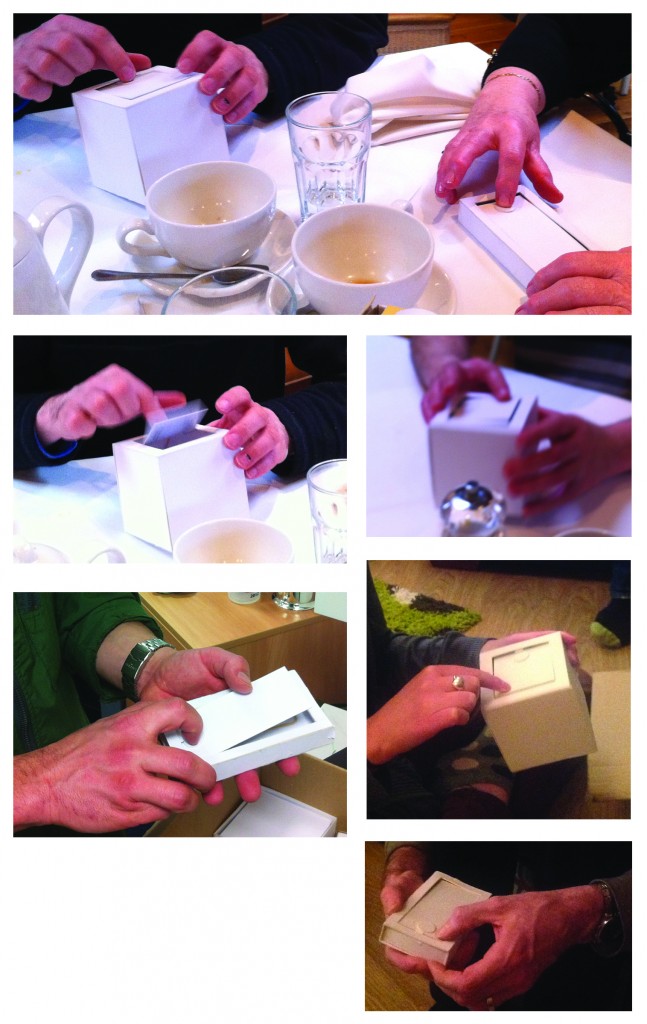
Observations: This object resulted in some unexpected results as participants seemed to avoid pressing the button and clicked the opposite side. Many factors could be to play in this interesting result, one being that people expect to open from the right and depending on how they held the object would determine if the button sat to the left or right. Also because this button had lost a lot of features that make it a button, such as an arrow, icon/symbol, a colour, some wording/hint for its required action, people began to question it’s use or may have not even seen it as a button. One observation was made that a participant tried to pull at it rather than press. It would also be fair to suggest that for boxes a button is not really used on such a thing, instead its usually a pulling action, or tearing, or unwrapping and so on.
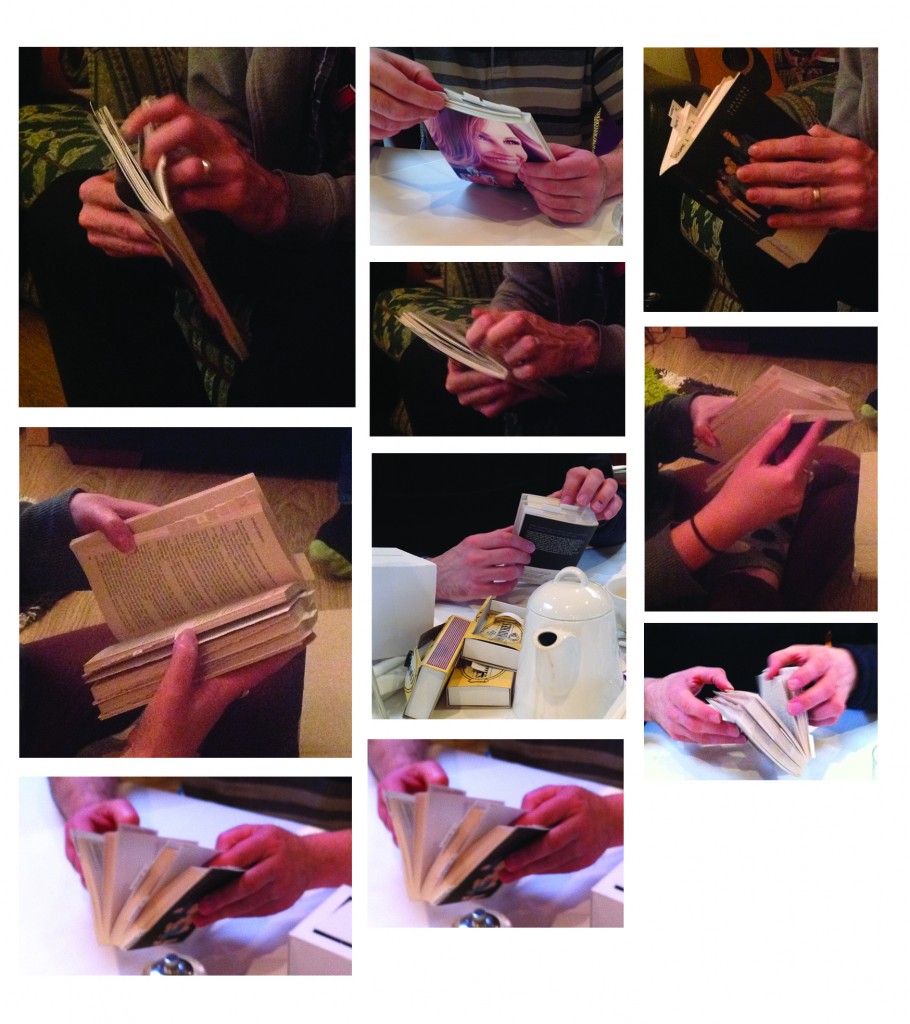
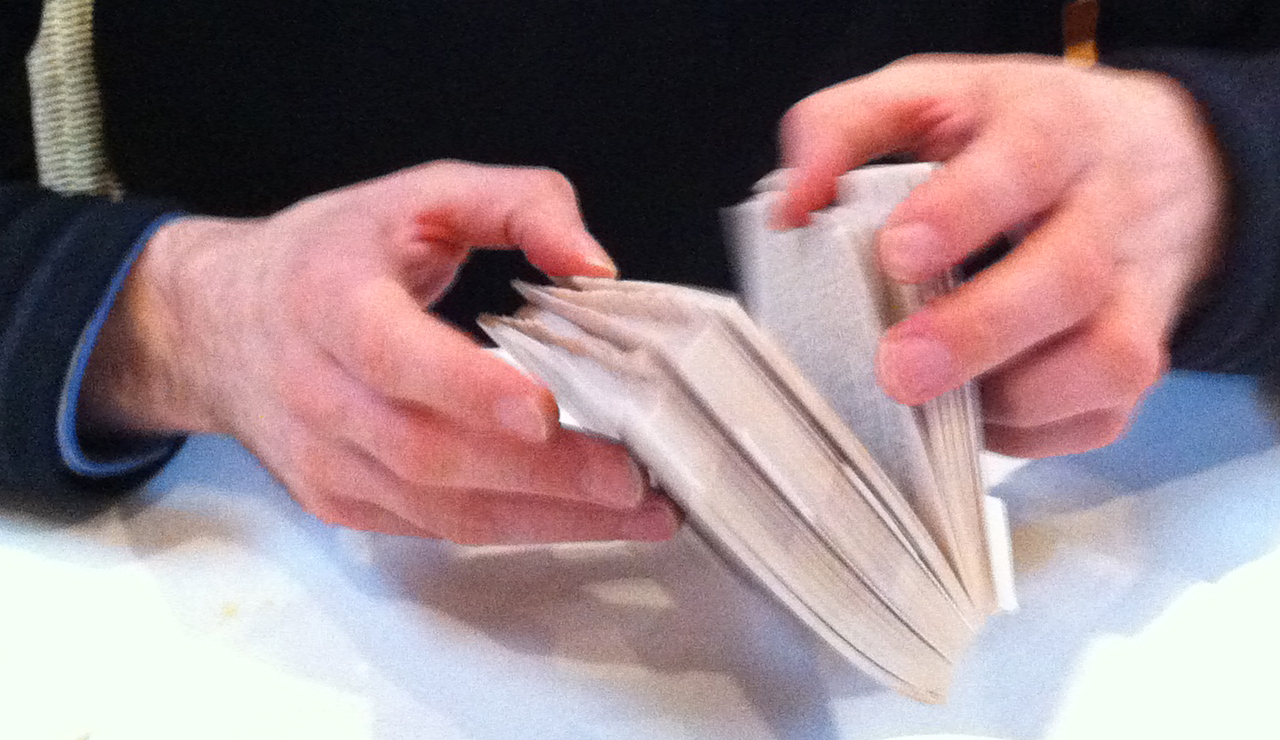
Observations: Participants interacted with the literature with ease, this could be as a result of this function already existing with stationery on various levels. However on conversation with the participants the feedback was uncertainty for the purpose of the the book yet they found the magazine to serve as a very useful tool and many feedback that this should be a feature within magazines.
List of References:
Bradley, S. (2010). The Framing Effect: Influence Your Audience By Setting The Context. Retrieved from http://www.vanseodesign.com/web-design/framing-expectation-exposure-effect/
Davis, C. (2005). Finding and Knowing. Psychology, Information and Computers. London, United Kingdom: Routledge.
Drucker, J. (1994, 2004). The Book as Sequence: Narrative and Non-Narrative. The Century of Artists’ Books. New York, NY: Granary Books.
Drucker, J., & McVarnish, E. (2009). Digital design after the 1970s. Graphic Design History. A Critical Guide (pp. 323-339). United States of America: Pearson Education.
Gleitman, H., Rozin, P., & Sabini, J. (1997). Solomon E. Asch (1907–1996): Obituary, 52(9), pp. 984-985.
Gordan, I. E. (1989). Theories of Visual Perception. United Kingdom: John Wiley & Sons Ltd.
Hall, S. (1997). Chapter 1. Representation, meaning and language. Representation: Cultural representations and signifying practices (pp.15-29). London, United Kingdom: SAGE/Open University.
Hollis, R. (2001). Graphic Design. A Concise History. (pp.186-223). London, UK: Thames & Hudson Ltd.
Meggs, P. (1998). The Digital Revolution. A History of Graphic Design (pp. 455-475). United States of America: John Wiley & Sons, Inc.
Mirzoeff, N. (1999). Introduction. What is visual culture? An Introduction to Visual Culture. United Kingdom: Routledge.
Mirzoeff, N. (2002). The Visual Culture Reader. (2nd ed.). United Kingdom: Routledge.
Mirzoeff, N. (2009). An Introduction to Visual Culture. (2nd ed.). United Kingdom: Routledge.
Oxford Dictionaries. What’s new? (February 2013). Retrieved from http://oxforddictionaries.com/words/what-s-new
Sturken, M., & Cartwright, L. (2001) The Internet: global village or multinational corporate marketplace? Practices of Looking. An Introduction to Visual Culture. Oxford, NY: Oxford University Press Ltd.
Weinschenk, S. M. (2009). Neuro Web Design. Berkeley, CA: New Riders.
Weinschenk, S. M. (2011). 100 Things Every Designer Needs to Know About People. Berkeley, CA: New Riders.
Bibliography:
Bradley, S. (2010). The Framing Effect: Influence Your Audience By Setting The Context. Retrieved from http://www.vanseodesign.com/web-design/framing-expectation-exposure-effect/
Behrens, R. R. (1998). Art, Design and Gestalt Theory. Leonardo 31(4), 299-303
Bonnici, P. (1999). Visual Language. The Hidden Medium of Communication. Switzerland: RotoVision SA.
Davis, C. (2005). Finding and Knowing. Psychology, Information and Computers. London, United Kingdom: Routledge.
Drucker, J. (1994, 2004). The Book as Sequence: Narrative and Non-Narrative. The Century of Artists’ Books. New York, NY: Granary Books.
Drucker, J., & McVarnish, E. (2009). Digital design after the 1970s. Graphic Design History. A Critical Guide (pp. 323-339). United States of America: Pearson Education.
Gleitman, H., Rozin, P., & Sabini, J. (1997). Solomon E. Asch (1907–1996): Obituary, 52(9), pp. 984-985.
Gordan, I. E. (1989). Theories of Visual Perception. United Kingdom: John Wiley & Sons Ltd.
Hall, S. (1997). Chapter 1. Representation, meaning and language. Representation: Cultural representations and signifying practices (pp.15-29). London, United Kingdom: SAGE/Open University.
Hollis, R. (2001). Graphic Design. A Concise History. (pp.186-223). London, UK: Thames & Hudson Ltd.
Joinson, A. N. (2003). Understanding the Psychology of Internet Behaviour. Virtual Worlds, Real Lives. Basingstoke, UK: Palgrave Macmillan.
Krugg, S. (2006). Don’t Make Me Think! A Common Sense Approach to Web Usability, Second Edition. United States of America: New Riders.
Lindgaard, G., Fernandes, G., Dudek, C., & Brown, J. (2006). Attention web designers: You have 50 milliseconds to make a good first impression! Behaviour and Information Technology, 25(2), pp. 115-126.
McCloud, S. (1993). Understanding Comics. The Invisible Art by Scott McCloud. United States of America: HarperCollins Publishers, Inc.
Meggs, P. (1998). The Digital Revolution. A History of Graphic Design (pp. 455-475). United States of America: John Wiley & Sons, Inc.
Mirzoeff, N. (1999). Introduction. What is visual culture? An Introduction to Visual Culture. United Kingdom: Routledge.
Mirzoeff, N. (2002). The Visual Culture Reader. (2nd ed.). United Kingdom: Routledge.
Mirzoeff, N. (2009). An Introduction to Visual Culture. (2nd ed.). United Kingdom: Routledge.
Moggridge, B. (2007). Designing Interactions. United States of America: MIT Press.
Oh, H., & Price, J. (2012). How do storefront window displays influence entering decisions of clothing stores? Journal of Retailing and Consumer Services 19(1), pp. 27-35.
Oxford Dictionaries. What’s new? (February 2013). Retrieved from http://oxforddictionaries.com/words/what-s-new
Rock, I. (1990). The Legacy of Solomon Asch: Essays in Cognition and Social Psychology. Hillsdale NJ: Psychology Press.
Sturken, M., & Cartwright, L. (2001) The Internet: global village or multinational corporate marketplace? Practices of Looking. An Introduction to Visual Culture. Oxford, NY: Oxford University Press Ltd.
Wallace, P. (1999). The Psychology of the Internet. Cambridge, UK: Cambridge University Press.
Weinschenk, S. M. (2009). Neuro Web Design. Berkeley, CA: New Riders.
Weinschenk, S. M. (2011). 100 Things Every Designer Needs to Know About People. Berkeley, CA: New Riders.
